













 Laizhou, CN
·
17 yrs
·
Brand Holder
Laizhou, CN
·
17 yrs
·
Brand Holder
Buying a CNC Machine? 3 Hidden Specs Most Manufacturers Overlook

 OEM/ODM available
 Samples price: US$0.01
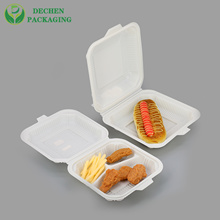
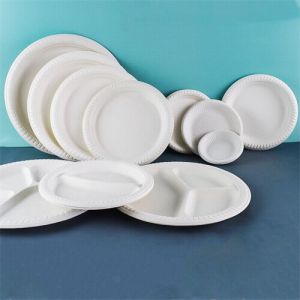
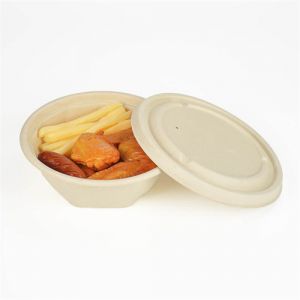
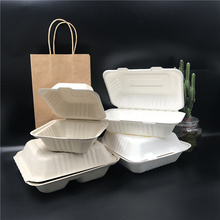
- CNC machine buying guide is suitable for food packaging, wrapping, and commercial display needs.
- CNC machine buying guide options support custom size, printing, packing, and brand presentation.
- hidden CNC specs helps buyers compare material performance, finish, and application fit.
- overlooked machine tool specifications is available for wholesale supply, OEM projects, and repeat orders.
- CNC machine buying guide supports restaurants, factories, distributors, and private label packaging buyers.
Buying a CNC Machine? 3 Hidden Specs Most Manufacturers Overlook
When purchasing a CNC machine, most buyers focus on spindle speed, work envelope, and axis travel. While these are important, several under-the-hood specifications can dramatically affect long-term accuracy, repeatability, and maintenance costs. This article reveals three critical specs that manufacturers often downplay or leave buried in fine print.
1. Spindle Thermal Compensation System
Heat generated during high-speed spindle operation causes the spindle shaft to expand, shifting the Z-axis zero point. Without active thermal compensation, your parts may drift out of tolerance as the machine warms up. Many manufacturers list spindle power and max RPM but omit how they handle thermal growth.
What to Look For
- Integrated temperature sensors on the spindle housing and bearings
- Automatic compensation algorithms that adjust zero offsets in real time
- Documented warm-up time required to reach thermal equilibrium
A machine with proper thermal compensation can hold ±5 µm repeatability across an eight-hour shift, whereas one without may see drift of 20–30 µm or more.
2. Ball Screw Preload and Lead Error
Ball screws convert rotary motion to linear movement. Preload eliminates backlash but also wears the nut and screw. Manufacturers rarely state the preload class (light, medium, heavy) or the expected lead error (e.g., C3, C5 accuracy grades). A machine specified only as “precision ball screws” may actually use a low-cost grade that introduces positioning errors.
Key Questions to Ask
- What is the ISO or JIS accuracy grade of the ball screws? (C3 or better is typical for precision machining)
- What preload method is used (single nut with oversize balls, double nut, or offset nut)?
- Is the preload adjustable or fixed? Adjustable allows re-tensioning after wear.
Ignoring this spec can lead to poor surface finish, chatter, and reduced tool life, especially during contouring operations.
3. Control System Architecture and Servo Loop Update Rate
Many buyers compare processor speed or screen size, but the real performance differentiator is the servo loop update rate—how often the control recalculates position commands. A control with a 1 kHz update rate can react four times faster than one running at 250 Hz. This directly impacts cornering accuracy and high-feed contouring.
What to Verify
- Servo loop update frequency (look for ≥1 kHz on modern machines)
- Type of feedback: linear scales vs. rotary encoders (scales eliminate leadscrew errors)
- Ability to run G-code lookahead (blocks per second) – higher numbers allow smoother high-speed machining
A machine with a fast servo loop and linear scales can produce finer surface finishes and tighter tolerances on complex 3D paths than one with older control hardware.
Frequently Asked Questions
Do all CNC machines have thermal compensation?
No. Entry-level and some mid-range machines omit this feature. It is more common on high-precision or five-axis machines. Always ask whether thermal compensation is standard or an option.
Can I retrofit thermal sensors later?
In some cases, yes, but it requires opening the spindle housing and modifying the control logic. Factory integration is always cleaner and more reliable.
Is C3 ball screw grade always necessary?
For general machining, C5 may be sufficient. For tight-tolerance work (molds, aerospace), C3 or higher is recommended. Know your required part tolerances before specifying grade.
How can I check the servo loop update rate?
Request the control system datasheet from the manufacturer. Look for terms like “servo update rate,” “position loop frequency,” or “current loop rate.”
Understanding these three hidden specifications—spindle thermal compensation, ball screw preload and accuracy grade, and control system servo loop update rate—can save you thousands in rework and downtime. When reviewing a quote, ask your supplier for these details in writing. A machine that excels in these areas will deliver consistent precision far longer than one that only looks good on paper.
Key product terms include CNC machine buying guide, hidden CNC specs, overlooked machine tool specifications for buyers comparing materials, applications, and supplier options.
Please enter a valid email address.

- Prev:fruit protection PAPER BAG certificate
- Next:How Machine Downtime Is Bleeding Your Shop Profits (And 5 Ways to Stop It)
Related knowledge
- 2022-07-06 fruit protection PAPER BAG certificate
- 2026-07-25 How Machine Downtime Is Bleeding Your Shop Profits (And 5 Ways to Stop It)
- 2026-06-14 Freshness First: Kraft Paper Coffee Bags with Valve for Roasters
- 2026-06-14 Are Biodegradable Popcorn Paper Bags Safe for Microwave Use?
- 2026-06-14 Heavy Duty Paper Takeout Bags: Keeping Your Food Deliveries Secure
- 2026-06-14 Why Greaseproof Paper Bags for Bakery are Essential for Your Cake Shop
Protection for this product
Shipping fee and delivery date to be negotiated. Chat with supplier now for more details.
 Easy Return
Make free local returns for defects on qualifying purchases
Money-back protection
Claim a refund if your order doesn't ship, is missing, or arrives with product issues
 Delivery guarantee
Expect your order to be delivered before scheduled dates or receive a 10% delay compensation
 Secure payments
Every payment you make on Lzdechen.com is secured with strict SSL encryption and protection protocols
 24/7 support
Access our virtual help center 24/7 or connect with live agents for assistance
Minor customization
Drawing-based customization
Sample-based customization
Full customization
OEM services available
QA/QC inspectors (1)
China custom manufacturer
≤2h average response time
100.0% on-time delivery
Rate US $1,100,000 +158 orders
Contact us
Email: jenny007@lzdechen.com
Whatsapp: +8613583554035
DECHEN Packaging with SGS BV certificates.
News
- 2026-05-10What is aluminium foil laminated paper ?
- 2025-10-11What is butter foil paper made of?
- 2025-10-11Choosing the Best Hot Dog Bags for Events
- 2025-07-18What is eco friendly food containers wholesale ?
- 2025-07-17How to custom food wrapping paper?
- 2025-07-04What is corn starch plates?
- 2025-07-02Disposable food packaging solutions | DECHEN Food Packaging Supplies
- 2025-07-01Are pla straws biodegradable ?
- 2025-07-01what are pla straws made of ?
- 2025-05-02What is paper foil laminate?